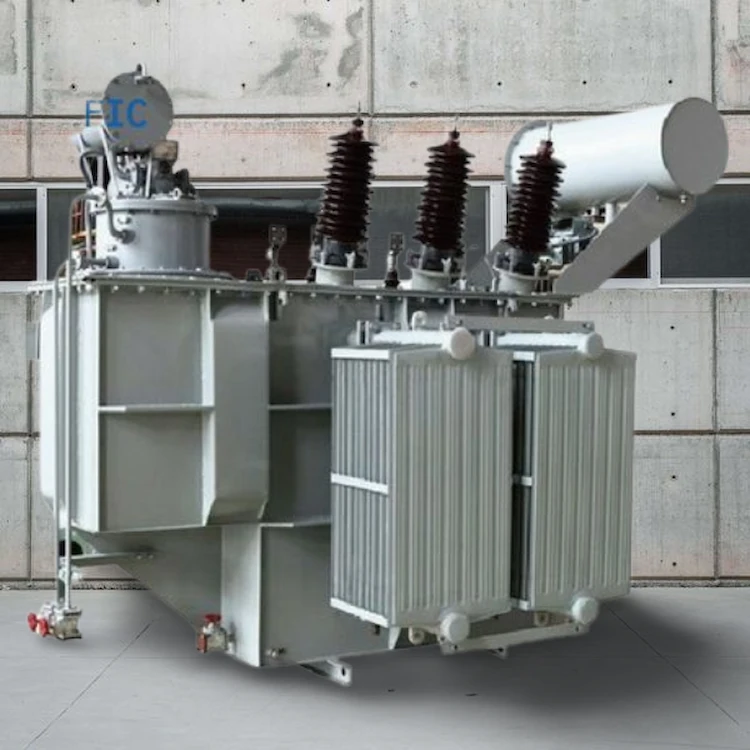
A 5000 kVA transformer is a high-capacity electrical transformer designed for substantial power distribution requirements. With a rated capacity of 5,000 kilovolt-amperes, it can serve large commercial facilities, manufacturing plants, utility infrastructure, data centers, and other installations with significant electrical demand. Selecting a transformer at this scale requires careful attention to voltage, load characteristics, cooling, protection, installation, and future capacity requirements.
What Does 5000 kVA Mean?
The 5,000 kVA rating represents the transformer’s apparent power capacity. Transformer ratings are expressed in kVA because the equipment must handle both voltage and current, regardless of the power factor of the connected load.
For a three-phase transformer, apparent power can be calculated using:
kVA = √3 × Voltage × Current ÷ 1,000
The current available at the primary and secondary sides will depend on their respective voltage levels. A 5000 kVA transformer operating at a lower secondary voltage will therefore carry substantially more current on that side.
The actual usable real power in kilowatts depends on the power factor of the connected electrical loads.
Where Are 5000 kVA Transformers Used?
A 5000 kVA transformer is generally considered for applications with substantial electrical requirements. Typical applications can include:
- Manufacturing facilities
- Large commercial buildings
- Data centers
- Hospitals and campuses
- Industrial processing plants
- Utility substations
- Mining operations
- Infrastructure projects
- Large renewable energy installations
The appropriate capacity depends on the calculated electrical demand rather than the size or type of facility alone.
Primary and Secondary Voltage
Voltage selection is one of the first specifications to establish when purchasing a large transformer. The primary voltage must match the incoming electrical supply, while the secondary voltage needs to suit the downstream distribution system.
A 5000 kVA transformer can be manufactured with different primary and secondary voltage combinations. The correct configuration depends on the utility supply and the facility’s electrical distribution design.
Tap arrangements may also be available to compensate for variations in incoming voltage. The permitted tap range and adjustment method should be confirmed from the manufacturer’s documentation.
Oil-Filled or Dry-Type Construction?
Large transformers can be manufactured using different insulation and cooling arrangements.
Oil-filled transformers use insulating liquid for both cooling and electrical insulation. They are widely used in utility and industrial applications and can be designed for substantial power ratings.
Dry-type transformers use solid insulation and air or another cooling arrangement rather than liquid insulation. They can be suitable for certain indoor or specialized installations, although the practical options at higher capacities depend on the manufacturer’s design and application requirements.
The choice should consider installation location, fire protection, environmental conditions, maintenance requirements, applicable standards, and project specifications.
Load Assessment Before Sizing
A transformer should be selected after evaluating the electrical load profile. A facility may have a mixture of lighting, HVAC equipment, motors, pumps, compressors, process machinery, computers, and other electrical loads.
Motor-driven equipment deserves particular attention because starting currents can be substantially higher than normal operating currents.
Engineers may evaluate maximum demand, load diversity, power factor, harmonic content, motor starting requirements, and expected future expansion before confirming the transformer rating.
Why Future Capacity Matters
Installing a transformer that exactly matches current demand may leave little room for expansion. A facility adding production equipment or additional electrical systems could eventually exceed the transformer’s practical capacity.
A 5000 kVA transformer may therefore be selected with future growth in mind. However, oversizing equipment unnecessarily can increase capital and operating costs.
A load forecast can help establish a reasonable balance between present requirements and expected future demand.
Cooling and Temperature Management
Large transformers generate heat during operation. Cooling systems are designed to keep internal temperatures within acceptable limits.
Oil-filled units may use natural or forced circulation methods depending on their design and rating. Larger installations may incorporate radiators, fans, pumps, or other cooling equipment.
Ambient temperature, altitude, enclosure arrangement, and operating load can all affect transformer temperature.
The selected transformer should have a cooling system appropriate for the expected operating environment and load profile.
Impedance and Fault Current
Transformer impedance affects voltage regulation and available fault current on the downstream system.
A lower impedance can result in higher prospective fault current, while higher impedance can reduce fault current but may contribute to greater voltage drop under load.
The transformer’s impedance therefore needs to be coordinated with the rest of the electrical system. Short-circuit studies can help engineers determine whether downstream switchgear, breakers, cables, and other equipment have suitable ratings.
Protection Requirements
A transformer of this capacity requires appropriate protection against electrical faults and abnormal operating conditions.
Depending on the installation, protection may include overcurrent protection, differential protection, temperature monitoring, pressure-related protection, surge protection, and other transformer-specific systems.
Protection settings should be coordinated with upstream and downstream equipment so that faults are isolated appropriately without unnecessarily shutting down healthy sections of the electrical network.
Installation Considerations
A 5000 kVA transformer can be physically large and heavy, so transportation and installation require detailed planning.
Site preparation may involve a reinforced foundation, equipment access, lifting arrangements, cable trenches, grounding systems, drainage, fire protection, and sufficient maintenance clearance.
For oil-filled transformers, the installation may also require consideration of liquid containment and environmental protection measures.
The installation site should provide adequate access for delivery vehicles and lifting equipment while meeting electrical safety clearances.
Efficiency and Operating Costs
Transformer efficiency becomes particularly significant at higher capacities because even relatively small losses can represent substantial energy consumption over long operating periods.
Core losses occur while the transformer is energized, while load losses increase with current.
Comparing efficiency data, cooling requirements, operating load, and expected service conditions can help facility owners understand the long-term cost implications of different transformer designs.
Maintenance of a Large Transformer
Regular inspection and maintenance can help identify developing problems before they result in an unexpected outage.
Depending on the transformer design, maintenance activities may include checking connections, cooling equipment, insulation systems, protective devices, bushings, grounding, and insulating fluid.
Oil-filled transformers may require periodic fluid testing to assess properties such as moisture content, dielectric strength, and signs of deterioration.
Maintenance requirements should follow the manufacturer’s recommendations and the facility’s electrical maintenance program.
Selecting a 5000 kVA Transformer
Choosing a 5000 kVA transformer involves more than selecting a 5 MVA rating. The complete specification should address:
- Primary voltage
- Secondary voltage
- Frequency
- Phase configuration
- Impedance
- Cooling method
- Insulation system
- Tap range
- Temperature rise
- Enclosure requirements
- Environmental conditions
- Protection requirements
- Applicable electrical standards
Transportation, foundation design, installation access, and future maintenance should also be considered during project planning.
See also: How Professional Content Drives Business Growth
Final Considerations
A 5000 kVA transformer can provide the capacity required for major electrical distribution systems, but its performance depends on correct engineering and installation. Load calculations, voltage requirements, fault levels, cooling, protection, site conditions, and future demand all need to be assessed before equipment is ordered.
For a project involving a transformer of this size, the electrical design should be developed by qualified professionals and coordinated with the utility, transformer manufacturer, switchgear supplier, and installation contractor. This ensures that the transformer works correctly with the wider power distribution system and that the supporting infrastructure is designed for its electrical and physical requirements.