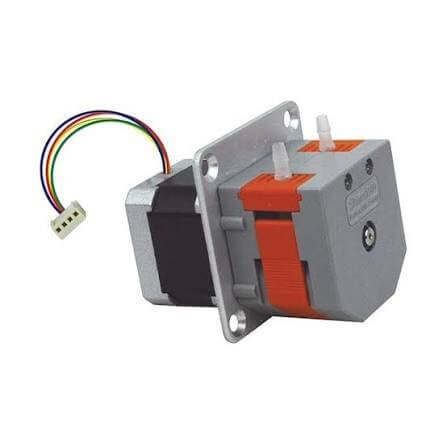
Within the broader micro pump category, meaningful performance differences exist between manufacturers, particularly around the precision consistency that determines whether a pump reliably meets demanding application accuracy requirements or merely approximates adequate performance under ideal testing conditions that may not fully reflect real-world operational demands.
Distinguishing True Precision From Marketing Claims
The term high precision appears frequently in pump marketing materials, but genuine precision performance requires validated testing data demonstrating consistent accuracy across realistic operational conditions, including variation in fluid viscosity, temperature fluctuation, and extended operational duty cycles, rather than simply citing best-case accuracy figures achieved under narrow, controlled testing conditions that may not reflect actual application use.
Engineering Foundations of Genuine Precision Performance
A genuinely high precision micro pump achieves its performance through multiple reinforcing engineering elements working together, including tightly toleranced mechanical components, sophisticated motor control systems capable of extremely fine speed regulation, and rigorous manufacturing quality control that maintains consistency across production units rather than achieving precision only in carefully selected sample units.
The Role of Motor Control Sophistication
Achieving genuine precision at micro pump scale depends heavily on motor control system sophistication, since flow accuracy ultimately derives from precise, consistent motor rotation speed, making advanced motor control circuitry, often incorporating closed-loop feedback systems that continuously verify and adjust actual performance against target specifications, a key differentiator between merely adequate and genuinely high precision pump performance.
Validating Precision Across Operational Variables
Genuine high precision performance claims should be supported by testing data covering realistic operational variables the pump will actually encounter in field use, including different fluid viscosities within the application’s expected range, temperature variation across anticipated operating environments, and extended duty cycle testing that confirms precision doesn’t meaningfully degrade over the product’s intended operational lifetime.
Manufacturing Consistency as a Precision Foundation
Even excellent individual unit precision provides limited practical value if manufacturing consistency across production runs doesn’t reliably reproduce this performance across every unit reaching customers, making rigorous, statistically validated quality control processes throughout production just as important as the underlying engineering design itself in delivering genuinely dependable high precision performance at scale.
See also: How to Turn Your Side Hustle into a Full-Time Business
Application-Specific Precision Requirements
Buyers should clearly define what precision level their specific application genuinely requires, since pursuing maximum available precision beyond actual application needs typically increases cost and complexity without delivering proportional practical benefit, making it important to match precision specifications to genuine requirements rather than defaulting to the highest available precision option regardless of actual need.
Evaluating Manufacturer Precision Claims Critically
Buyers should request detailed testing methodology and data supporting any high precision performance claims, rather than accepting general marketing assertions at face value, since genuine precision engineering capability should be demonstrable through transparent, detailed technical documentation rather than requiring buyers to simply trust unsubstantiated manufacturer claims.
Conclusion
Genuine high precision micro pump performance requires validated engineering across mechanical tolerance, motor control sophistication, and manufacturing consistency, rather than simply marketing terminology applied to standard pump designs. Buyers should critically evaluate precision claims through detailed technical documentation and testing data rather than accepting general assertions without substantiation.
FAQs
Q1: How can I distinguish genuine high precision pump performance from marketing claims? Request validated testing data covering realistic operational conditions, including fluid viscosity variation, temperature fluctuation, and extended duty cycles, rather than relying on best-case accuracy figures alone.
Q2: What role does motor control play in achieving pump precision? Advanced motor control systems, particularly those incorporating closed-loop feedback, significantly affect flow accuracy since precision ultimately derives from consistent, precisely regulated motor rotation speed.
Q3: Do I always need the highest available precision specification for my application? Not necessarily; pursuing precision beyond genuine application requirements typically increases cost and complexity without proportional practical benefit, so match specifications to actual needs.