Music has an important role in shaping the emotional atmosphere of a wedding. From the moment guests arrive to the final celebration, carefully selected performances can create transitions between different parts of the event and help memorable moments feel even more special. Couples considering wedding live music should therefore think about the mood, venue, schedule, musicians, and musical style before making arrangements.
A live performance can also provide flexibility that recorded playlists cannot always offer. Musicians can adapt the energy of a performance to the room, the timing of the ceremony, and the reactions of guests.
Music for Different Parts of the Wedding
A wedding usually contains several distinct moments, and each can benefit from a different musical atmosphere.
Ceremony music often needs to be gentle and elegant. During the cocktail reception, lighter background music can encourage conversation without dominating the room.
Dinner may require a warm and sophisticated sound, while the later part of the celebration can become more energetic.
Planning music according to the event timeline creates a natural progression instead of treating the entire wedding as one continuous performance.
Choosing a Musical Style
The couple’s personal taste should be the starting point.
Some couples prefer classical arrangements, while others enjoy jazz, acoustic pop, soul, or contemporary songs. A combination of styles can also work well if the transitions are planned carefully.
The venue can influence the decision too. A formal hotel ballroom may suit an elegant jazz ensemble, while an outdoor garden could work beautifully with acoustic instruments.
The objective is not simply to choose wedding live music songs that the couple likes, but to create a musical environment that feels appropriate for the setting.
Selecting the Right Band Size
The number of musicians can change both the sound and the visual presence of a performance.
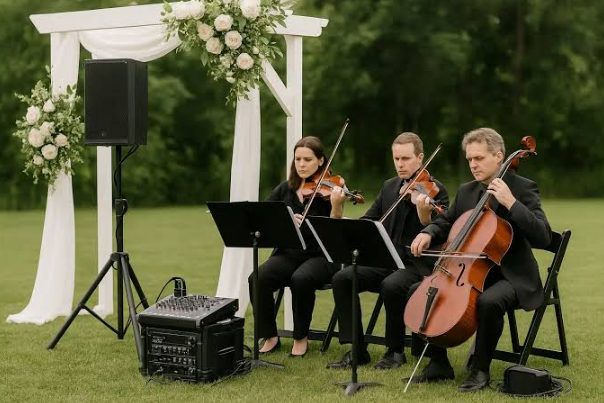
A duo may be suitable for an intimate ceremony or cocktail hour. A trio or quartet can provide a fuller sound for dinner, while larger ensembles can create greater energy for a dance-focused reception.
Budget and venue size should also be considered. A large band may not be necessary in a small room, while an undersized group may struggle to create the desired impact in a large venue.
Discussing the venue with the musicians can help determine a practical setup.
Building a Personalized Setlist
A personalized setlist can make the wedding feel more connected to the couple.
Consider selecting songs that represent important moments in the relationship, including the processional, first dance, dinner background music, and celebration songs.
However, the setlist should also consider the guests. A wedding may include people from different generations and cultural backgrounds, so a mixture of familiar songs and personal favourites can help create an inclusive atmosphere.
Professional musicians can often suggest arrangements that preserve the meaning of a song while adapting it to the band’s instrumentation.
The Importance of Sound Quality
Good musicians need appropriate sound equipment to perform effectively.
Venue acoustics, room size, microphone placement, speaker positioning, and sound levels can all influence the audience experience.
For weddings, volume is particularly important. Music should be energetic when appropriate but should not make conversation difficult during dinner.
A professional sound setup and experienced audio technician can help maintain consistent quality throughout the event.
Outdoor Wedding Considerations
Outdoor weddings introduce additional challenges.
Wind, weather, electricity, and sound distribution can affect a performance. Instruments and electronic equipment also need suitable protection.
Couples planning an outdoor event should discuss shelter, power supply, stage positioning, and contingency arrangements with the musicians and venue team.
A covered performance area can help protect equipment while also creating a defined visual space for the performers.
Working With the Wedding Timeline
Music planning should be integrated into the overall event schedule.
The band should know when guests arrive, when the ceremony begins, when the couple enters, when speeches occur, when dinner is served, and when dancing starts.
This allows musicians to prepare suitable transitions and avoid awkward gaps.
A dedicated music coordinator or band representative can also communicate with the wedding planner and venue team, reducing confusion on the day.
Special Musical Requests
Some couples want a particular song performed during a meaningful moment.
A professional band may be able to arrange a song specifically for the wedding. This can be especially valuable when the original recording does not match the band’s instrumentation.
Couples should discuss special requests early because custom arrangements may require additional preparation and rehearsal.
Booking in Advance
Popular wedding musicians can become unavailable during busy wedding seasons.
Planning several months ahead provides more time to discuss the venue, band size, music style, schedule, and special requests.
Early planning is particularly useful for couples who have a specific vocalist or instrumental combination in mind.
Three Common Questions
1. Why choose live music instead of a playlist?
Live musicians can respond to the atmosphere, adjust performance energy, and create a more personal experience. A playlist can still be useful for breaks or specific parts of the event.
2. How many musicians should a wedding have?
There is no universal number. The appropriate size depends on venue capacity, budget, desired sound, and the different stages of the wedding.
3. Can musicians perform a special song?
Many professional musicians can prepare customized arrangements, but requests should be discussed well in advance to allow time for preparation and rehearsal.
Conclusion
Wedding music can influence the emotional character of an entire celebration. By planning the musical style, band size, setlist, sound requirements, timeline, and special requests in advance, couples can create a smoother experience for themselves and their guests.
The most successful music plans are those that balance personal taste with the practical realities of the venue and event schedule. With thoughtful preparation, live performance can become an important part of the memories created on the wedding day.