Customer trust develops through repeated experiences with a product and the business behind it. Quality, reliability, service, and honest communication all contribute to that relationship. Product labels play a smaller but important role by helping customers identify items and understand the information provided by the manufacturer.
When labels are clear, accurate, and consistent, they can support a professional product experience. When information is misleading or difficult to read, customers may question the care taken during production.
Communicate Product Information Honestly
Labels should describe products accurately and avoid claims that cannot be supported. Customers need information that helps them understand what they are buying, how to use it, and what limitations may apply.
Marketing language should not obscure important details. Claims about performance, ingredients, environmental benefits, or special characteristics should be reviewed for accuracy and compliance with relevant rules.
Avoid Confusing or Exaggerated Claims
Overstated claims may attract attention initially but can damage credibility if the product does not meet expectations. Businesses should ensure that promotional statements are consistent with the product’s documented characteristics and available evidence.
Where specific declarations are required by law, the company should confirm that they are complete and correctly presented.
Make Important Details Easy to Find
A label should help customers locate key information quickly. Product identification, directions, warnings, and other essential details should be organised clearly.
Readable typography, adequate contrast, and sensible spacing make information easier to understand. A crowded design may look visually complex without helping the customer.
Businesses should evaluate packaging from the customer’s perspective and consider whether someone unfamiliar with the product could understand the important details.
Maintain Consistency Across Product Ranges
Customers often recognise a brand through repeated visual cues. Consistent use of logos, typography, colour, and product naming can help them identify products across different sizes or variations.
However, consistency should not make similar products difficult to distinguish. Variants should be clearly identified when their contents, intended use, or instructions differ.
A well-managed design system allows the brand to remain recognisable while giving each product the information it needs.
Protect Label Quality During Production
Customers may interpret damaged, crooked, faded, or poorly printed labels as signs of weak quality control. These issues do not always indicate a problem with the product itself, but they can affect the overall impression.
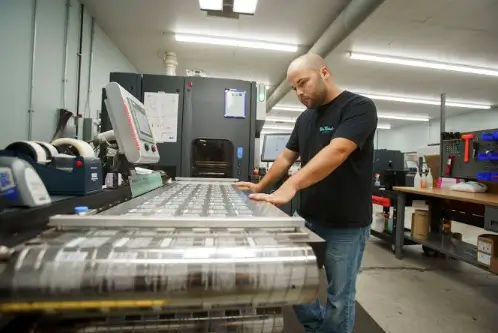
Businesses should establish inspection procedures for artwork, print quality, alignment, and adhesion. The label should also be tested under the storage and handling conditions it is likely to experience.
Companies considering external labelling services should clarify their expectations for quality, durability, consistency, and defect handling before production begins.
Support Traceability and Customer Service
When a customer reports a problem, clear product identification can help the business investigate. Batch numbers, serial numbers, or other identifiers may connect the item to relevant production and distribution records.
This can make it easier to review quality issues, identify affected stock, and provide accurate information to customers.
The company should ensure that any traceability system is maintained properly and that staff know how to use it when responding to enquiries or complaints.
Use Feedback to Improve Packaging
Customer service teams can help identify recurring questions about product instructions, ingredients, warnings, or product variants. These questions may reveal opportunities to improve the label.
Businesses should review feedback alongside quality reports and regulatory requirements. A change intended to improve clarity must not remove information that is mandatory or introduce unsupported claims.
Updated artwork should pass through a controlled approval process before it is used in production.
Build Trust Through Responsible Practices
Trust also depends on how businesses handle mistakes. If an incorrect label reaches customers, the company should assess the issue promptly, follow applicable reporting or corrective-action requirements, and communicate appropriately.
Keeping records of artwork versions, production batches, and corrective actions can help the business understand what happened and prevent a repeat.
Responsible labelling is therefore not just a design task. It forms part of the wider system used to protect customers and maintain product quality.
Frequently Asked Questions
1. Can a label influence customer trust?
Yes. Clear, accurate, and professional packaging can support confidence, although trust also depends on product performance, service, and the company’s overall conduct.
2. What should businesses avoid on product labels?
They should avoid inaccurate details, unsupported claims, unreadable text, misleading presentation, and failure to include information required by applicable regulations.
3. How can customer feedback improve labels?
Feedback can reveal confusing instructions, missing details, or difficulty distinguishing product variants. Businesses can use these insights to review wording and layout while preserving required information.
Conclusion
Labels help connect product quality with customer understanding. Accurate claims, readable information, consistent branding, and reliable production standards can support a more trustworthy experience. When businesses review feedback and manage label changes carefully, packaging becomes a useful part of their wider commitment to quality and transparency.