Most of the errors are the same three. Treating a milligram figure as though it carries from one molecule to the other. Reading injection volume as a signal of dose. And moving from a fixed-dose pen to a vial that has to be drawn into a syringe. Semaglutide and tirzepatide have separate dosing scales, so nothing measured on one transfers.
The arithmetic people attempt does not exist
Semaglutide acts on the GLP-1 receptor. Tirzepatide acts on the glucose-dependent insulinotropic polypeptide receptor as well as the GLP-1 receptor. The two were developed on separate scales in separate trial programs, and neither prescribing information contains any figure translating one into the other.
The Zepbound labeling states that the recommended starting dosage for all indications is 2.5 mg once weekly for four weeks, and that 2.5 mg is for treatment initiation and is not approved as a maintenance dosage. Wegovy injection begins at 0.25 mg once weekly. Someone arriving at tirzepatide from the top of the semaglutide range begins at the bottom of the tirzepatide range, because that is where the tirzepatide range begins for everyone.
Worth noticing: the Wegovy labeling does contain a switching section with explicit timing. It covers moving between Wegovy injection and Wegovy tablets, both semaglutide. No comparable instruction exists for crossing to a different molecule, and the absence is the point rather than an omission.
Because no shared figure links the two molecules, anyone weighing a switch tends to look for a plain side-by-side reference first. Telehealth providers handle that unevenly: Ro, Hims and Hers, and Henry Meds each present their own dosing guidance, while HealthRX keeps a public Wegovy vs Zepbound explainer that sets the two starting ranges next to each other. Reading one of those before a transition is a way to see how far apart the scales sit rather than assuming a number carries across.
Volume tells you almost nothing
People who have injected for a year develop a sense of what a dose looks like in the barrel. That sense misleads on both products. Wegovy single-dose pens and syringes deliver 0.25 mg, 0.5 mg and 1 mg in 0.5 mL, then 1.7 mg and 2.4 mg in 0.75 mL. The high-dose 7.2 mg presentation is also 0.75 mL. Volume rises once across the whole escalation and then stops moving.
Zepbound is worse for this habit. Every single-dose pen and single-dose vial strength, from 2.5 mg through 15 mg, is packaged in 0.5 mL. The multi-dose vial delivers each of its four doses in 0.6 mL, at concentrations running from 4.17 mg/mL for the 2.5 mg dose to 25 mg/mL for the 15 mg dose. Two injections of identical volume can differ sixfold in drug.
The device usually changes, and that is what to rehearse
| Presentation | What the patient physically does | What a switch changes |
|---|---|---|
| Wegovy single-dose pen or syringe | One fixed dose, no measuring | Nothing to unlearn if the new product is also a pen |
| Wegovy FlexTouch single-patient-use pen | Four weekly 2.4 mg doses from one pen | Dial-and-count habits do not apply to single-dose devices |
| Zepbound single-dose pen | One fixed dose, no measuring | Closest match to a pen-based routine |
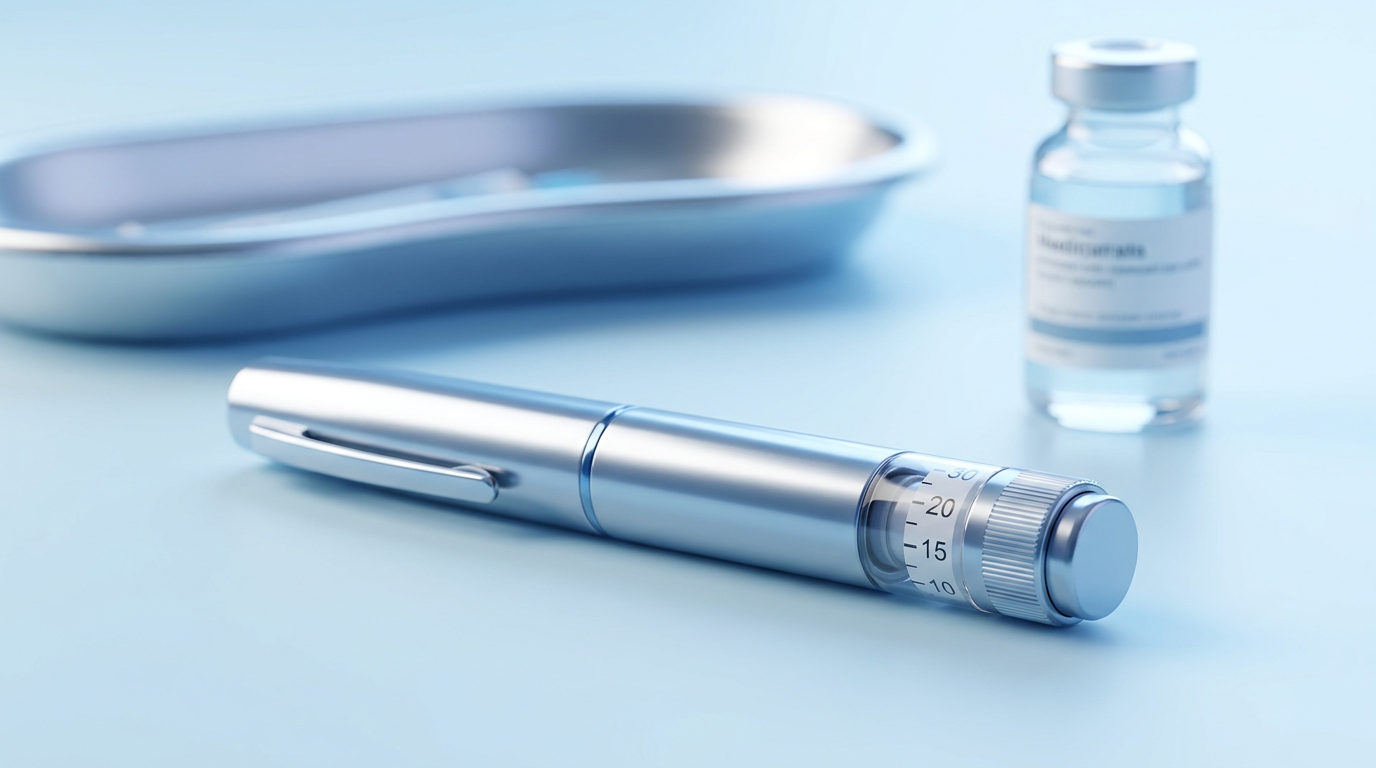
| Zepbound single-dose vial | Draw the full contents with a syringe | First time measuring, for many people |
| Zepbound multi-dose vial | Draw 0.6 mL, four times from one vial | Vial must last four weeks and be tracked |
| Zepbound KwikPen | Four doses from one pen | Not recommended for self-administration by people with visual impairment |
| Compounded vial | Draw a volume set by that pharmacy | Concentration is pharmacy-specific, not standard |
The Zepbound labeling tells vial users to use a syringe appropriate for the dose, giving the example of a 1 mL syringe able to measure 0.5 mL or 0.6 mL, and to use a new syringe and needle for every injection. That instruction exists because a person who has only ever clicked a pen has no practice at drawing a volume accurately.
Cost pressure is where improvisation starts
Almost every dangerous measurement habit begins as an attempt to stretch a supply that costs too much. Knowing what the next twelve months costs, rather than the first month, removes the incentive before it forms. The manufacturer channels LillyDirect and NovoCare Pharmacy publish self-pay prices for the branded products, and telehealth prescribers including Ro, Hims & Hers, LifeMD and FormBlends publish their own structures for supervision and medication, which is the number worth comparing before a transition rather than after one.
Compounded vials are where tenfold errors appear
A poison control case series published in the Journal of the American Pharmacists Association described three adverse events after incorrect administration of compounded semaglutide. Two patients gave themselves tenfold overdoses. One had been dispensed a vial and syringes with no counseling on administration. One had been dosing in milliliters and units rather than milligrams. All three had days of nausea, vomiting and abdominal pain.
A pharmacovigilance analysis of FDA adverse event reports from 2018 to 2024 found 707 reports involving compounded GLP-1 products out of 81,078 total, with markedly higher reporting odds for preparation errors and for contamination, and roughly double the odds of hospitalization. Compounded drugs are not FDA-approved and are not assessed for safety, effectiveness or quality before they reach a patient, so the concentration in the vial is whatever that pharmacy prepared. Any transition involving one needs the prescriber to know the exact product, strength and source.
Running the two products together
The Zepbound labeling states plainly that coadministration with other tirzepatide-containing products, or with any GLP-1 receptor agonist, is not recommended. That covers the improvised overlap where someone finishes a remaining box of one product while beginning the other. When the last dose of the old product falls and when the first dose of the new one falls is a prescribing decision with a written answer, not a scheduling preference.
What does carry over
Injection technique largely survives the move. Both products are given subcutaneously in the abdomen, thigh or upper arm, once weekly, on the same day each week, at any time of day, with or without food. Neither pen is ever shared between patients, even with a fresh needle, because that risks transmitting bloodborne pathogens.
The boxed warning carries over as well. Both labels warn that the drug caused dose-dependent thyroid C-cell tumors in rodents, and both are contraindicated in patients with a personal or family history of medullary thyroid carcinoma or Multiple Endocrine Neoplasia syndrome type 2. Symptoms flagged in both labels include a neck mass, difficulty swallowing, shortness of breath and persistent hoarseness. Someone who was screened for this before starting semaglutide is not exempt from the same contraindication on tirzepatide.
Frequently asked questions
Does 0.5 mL of one product deliver the same as 0.5 mL of the other?
No, and the comparison has no meaning. Each strength is packaged at its own concentration, so volume identifies the presentation rather than the amount of drug. Zepbound single-dose vials all hold 0.5 mL across six different strengths, which makes volume actively misleading as a check.
Can leftover pen needles be used with a vial?
The labeling directs vial users to a syringe capable of measuring the specific dose volume, with a new syringe and needle each time. Pen needles are designed for a pen. Matching the syringe to the volume being drawn is part of the instruction, not an accessory choice.
What should be checked on a compounded vial label?
The active ingredient named in full, the concentration in milligrams per milliliter, the total volume, the beyond-use date and the dispensing pharmacy. Instructions written in units rather than milligrams have been linked to overdoses, and a prescriber cannot advise on a transition without those specifics.
Does the weekly injection day carry across?
The day is part of the prescribed schedule for each product, and the two labels handle timing differently. Whether the existing day is kept or moved during a transition is settled by the prescriber, since the interval between the final dose of one product and the first of the other is a clinical decision.
Is a switch a good moment to change from a pen to vials?
It stacks two changes at once. The molecule, the scale and the escalation are all new already, and adding a first experience of drawing up a dose to that week increases the chance of an error. Raising the presentation question in advance keeps the changes separate.